Black Colored Quartz: Colors, Styles & Design Ideas
- Author: info VIC - Time
- Blog
Black colored quartz brings a bold, modern look to kitchens, islands, vanities, and commercial interiors. From deep solid black to designs with white or gold-style veining, it offers more variety than many buyers expect. This guide compares black quartz countertop colors with brown quartz colors, blue colored quartz, and beige color quartz countertops to help you choose the right palette for your space.
1. What Is Black Colored Quartz?
Black colored quartz is an engineered surface designed with a black or near-black background. Depending on the pattern, it may appear almost solid, contain fine speckles, or feature dramatic veins inspired by marble and other natural stones. The dark base creates strong visual contrast and can make lighter cabinetry, metal hardware, and backsplashes stand out.
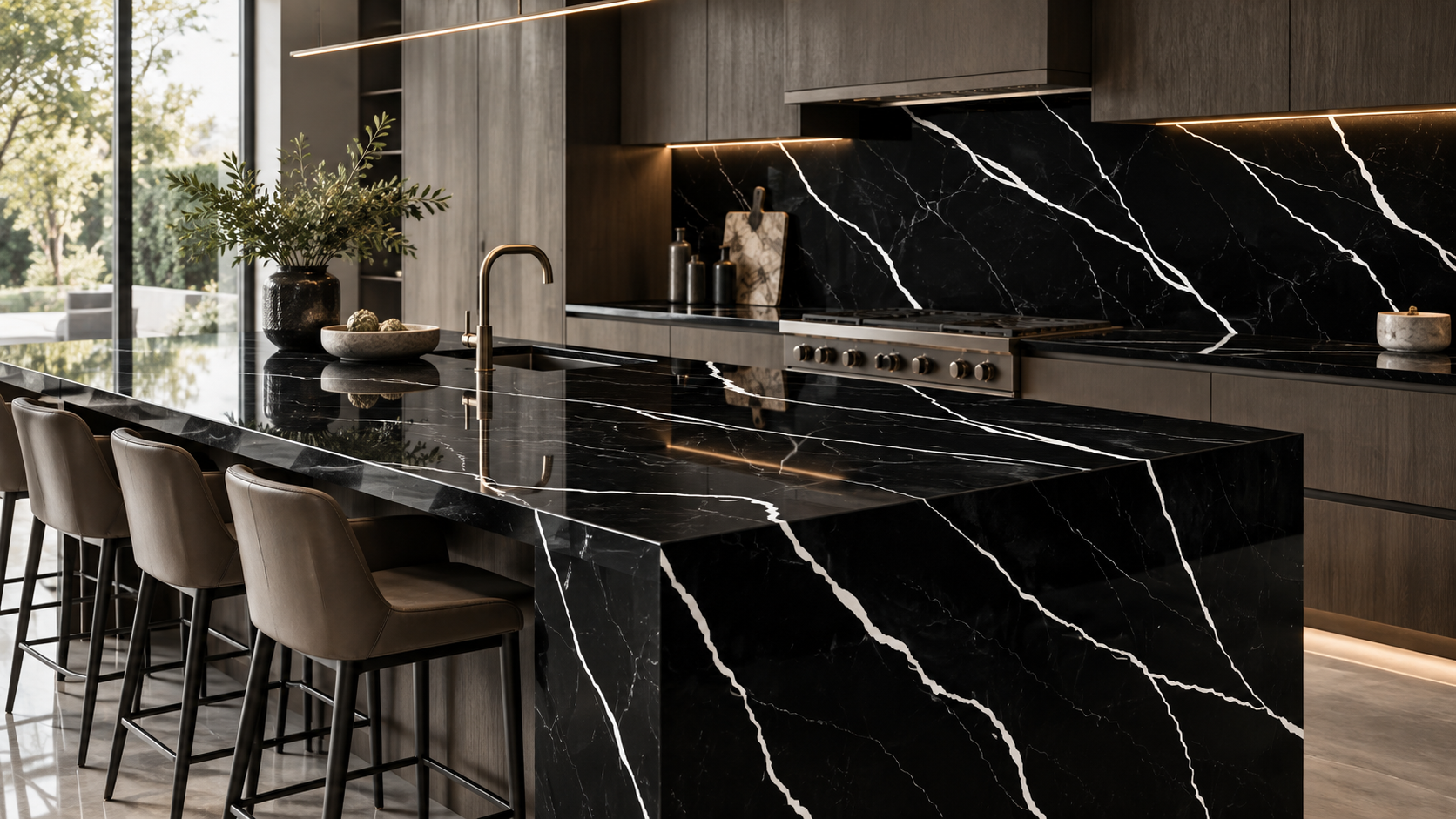
This surface is often used on kitchen islands, bar tops, vanities, and reception counters where the countertop is intended to become a focal point. Black colored quartz can also work across a full kitchen when the design includes enough light and contrast to keep the room balanced.
>>> SEE MORE: Blue Quartz Countertop Colors for Modern Kitchens
2. Popular Black Quartz Countertop Colors
Black quartz countertop colors range from simple solid designs to patterned surfaces with white, gray, or warm gold-style veining. Choosing the right option depends on how much contrast and visual movement you want in the finished space.
For large islands, bold veining can become a major design feature. For multifamily or repeated project applications, simpler black quartz countertop colors may be easier to coordinate across different cabinet packages and layouts.
3. Black Colored Quartz vs. Brown Quartz Colors
Brown quartz colors create a warmer and more natural atmosphere than black. Taupe, coffee, and deeper chocolate shades often work well with wood cabinetry, cream finishes, beige flooring, and warm lighting. Brown can add depth without creating the same level of contrast as a dark black surface.
Black colored quartz generally feels more modern and architectural. If the cabinetry already has warm wood tones, brown quartz colors can create a smoother transition, while black can produce a sharper and more dramatic result. The better choice depends on the undertones of the surrounding cabinetry, floor, backsplash, and hardware.
4. Black Quartz Countertop Colors vs. Blue Colored Quartz
Blue colored quartz is a strong alternative for buyers who want a statement surface with more visible color. Shades may range from pale blue-gray to deep navy and can include white, gray, or warm veins. Light blue can feel calm and fresh, while navy creates a richer and more expressive appearance.
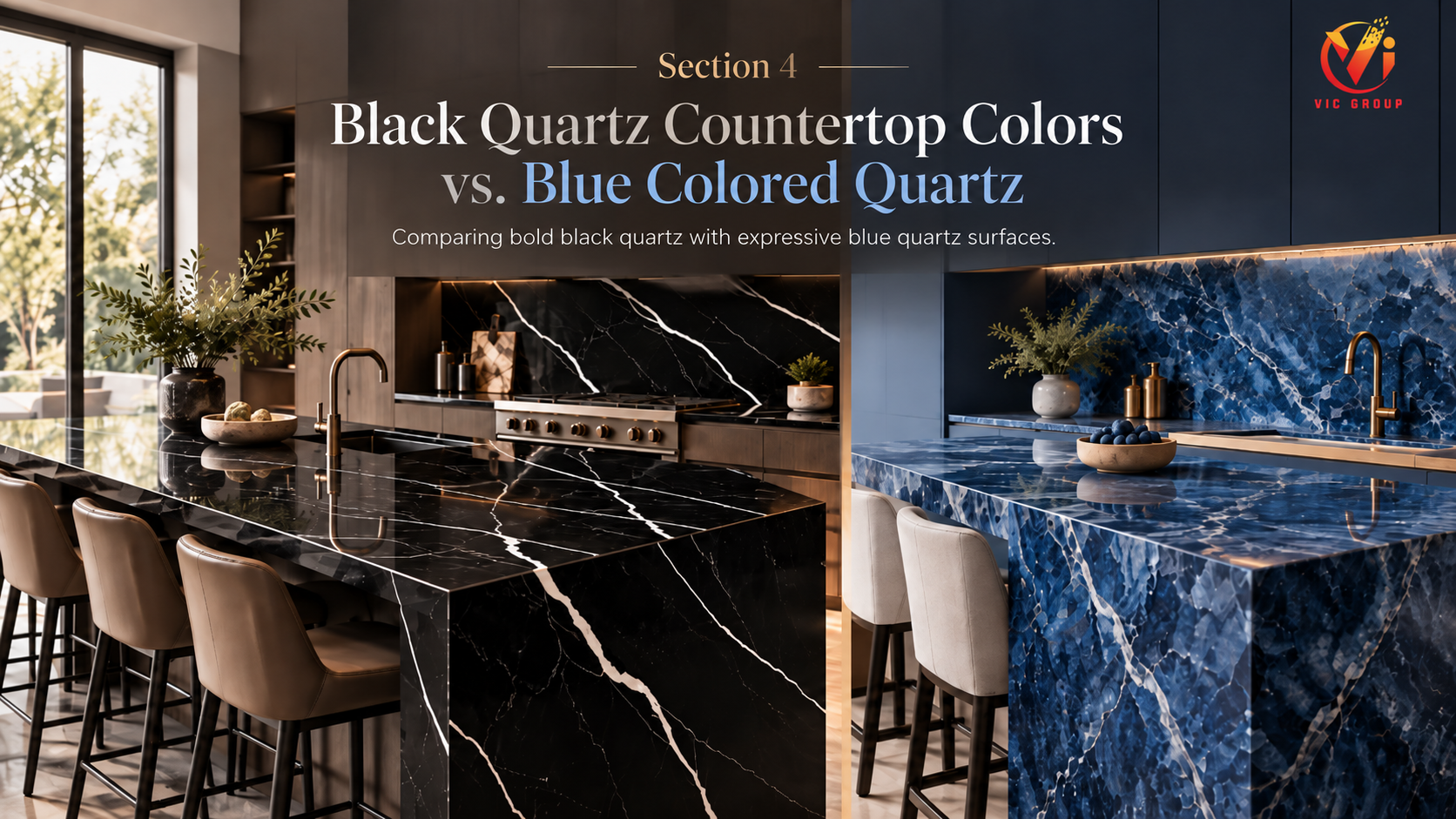
Compared with blue colored quartz, black quartz countertop colors are generally easier to combine with a wide range of cabinet colors because black behaves more like a neutral. Blue creates a more specific design direction, so samples should be checked carefully against cabinetry, flooring, hardware, and lighting before final approval.
5. Black vs. Beige Color Quartz Countertops
Beige color quartz countertops are well suited to warm, soft, and transitional interiors. Beige coordinates naturally with cream cabinets, light wood, warm gray, brown flooring, and brass or bronze hardware. It can also help smaller or darker rooms feel visually lighter.
Black colored quartz creates more visual weight and stronger contrast. When choosing between black and beige color quartz countertops, consider room size, natural light, cabinet color, and whether the countertop should blend quietly into the overall design or become a major focal point.
For projects requiring a more neutral palette, beige color quartz countertops usually provide broader compatibility. Black works better when contrast and visual impact are important parts of the design concept.
6. How to Choose the Right Quartz Color
Start with the largest fixed elements in the room: cabinetry, flooring, backsplash, and wall color. A countertop sample may look attractive on its own but change noticeably beside warm wood, cool gray cabinets, or artificial lighting. Reviewing materials together helps identify undertone conflicts before the final selection.
Countertop size also changes visual impact. Dark black colored quartz becomes more dominant across a large island, while beige and lighter blue colored quartz reflect more light visually. Pattern scale matters as well because dramatic veins can look very different on a full slab compared with a small sample.
7. Matching Black Colored Quartz With Cabinets
White cabinetry and black colored quartz create a clear high-contrast combination that works well in modern and transitional kitchens. Light wood cabinetry softens the dark surface and introduces warmth, while brass or brushed-metal hardware can create a more decorative accent.
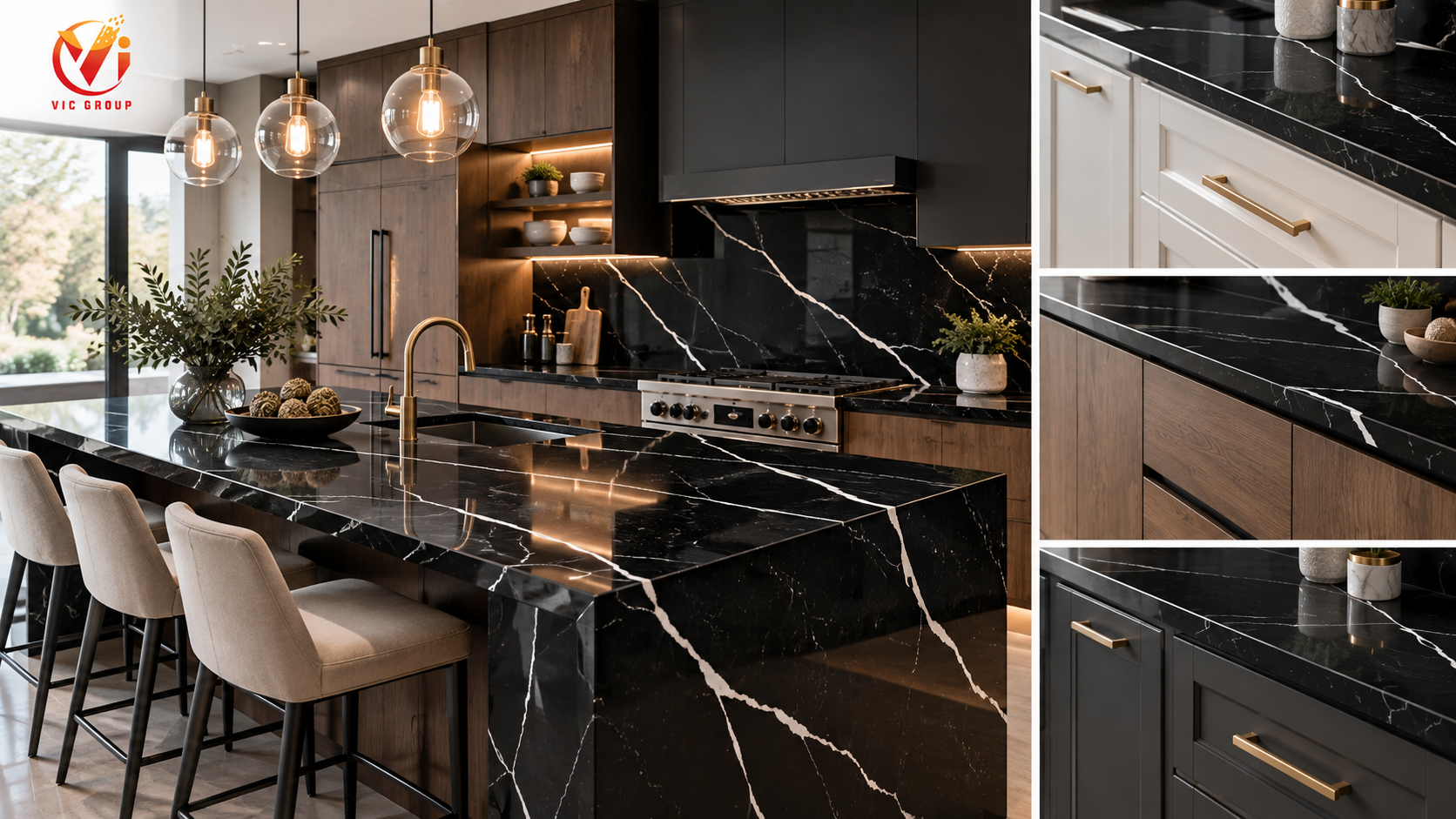
With navy, charcoal, or black cabinets, lighting becomes especially important. In these darker schemes, black quartz countertop colors with visible white, gray, or gold-style veins can provide more separation than a nearly solid surface. Reviewing a full slab is particularly useful when vein movement will continue across an island or waterfall edge.
>>> SEE MORE: Modern Kitchen Island Ideas: 5 Elegant Quartz Designs
8. Which Quartz Color Is Best for Your Project?
Black colored quartz works well when the goal is strong contrast and a clean statement. Brown quartz colors suit warmer and earthier palettes, while blue colored quartz creates a more distinctive design identity. Beige color quartz countertops generally offer broader compatibility with neutral, traditional, and transitional interiors.
For distributors, fabricators, builders, and project buyers, appearance should also be considered together with project consistency. Full slabs provide a clearer view of background tone and pattern scale than small samples, especially when the same quartz design will be repeated across multiple kitchens, vanities, hotel rooms, or commercial surfaces.
9. Conclusion
Black colored quartz offers much more than a simple dark countertop. From near-solid surfaces to dramatic black quartz countertop colors with white, gray, or gold-style veining, the category can support both minimalist interiors and statement-focused designs.
When comparing black with brown quartz colors, blue colored quartz, or beige color quartz countertops, focus on undertone, contrast, lighting, cabinetry, and pattern scale. The best quartz color is the one that works with the complete material palette and creates a consistent appearance across the finished space.