Blue Quartz Countertop Colors for Modern Kitchens
- Author: info VIC - Time
- Blog
Blue quartz countertop colors offer a distinctive alternative to traditional white, gray, and beige surfaces. From soft blue-gray tones to deeper navy-inspired designs, blue quartz can create either a subtle accent or a strong focal point. This guide explains popular blue color quartz styles and compares them with beige and brown quartz options to help homeowners, designers, builders, and project buyers choose the right surface.
1. What Are Blue Quartz Countertop Colors?
Blue quartz countertop colors include engineered quartz surfaces featuring blue as the main background, vein color, or accent tone. Depending on the design, blue can range from pale gray-blue and coastal tones to saturated navy or dramatic blue veining.
Some blue quartz designs use a nearly solid color, while others combine blue with white, gray, beige, or gold-style veining. This variety makes blue quartz suitable for modern kitchens, bathroom vanities, hospitality interiors, reception counters, and statement islands.
Compared with neutral colors, blue color quartz tends to create a stronger visual identity. The final effect depends heavily on the shade, pattern scale, cabinet color, lighting, and surrounding finishes.
2. Popular Types of Blue Quartz Countertop Colors
Not every blue countertop creates the same look. Buyers should first decide whether they want blue to act as a neutral, an accent, or the dominant color.
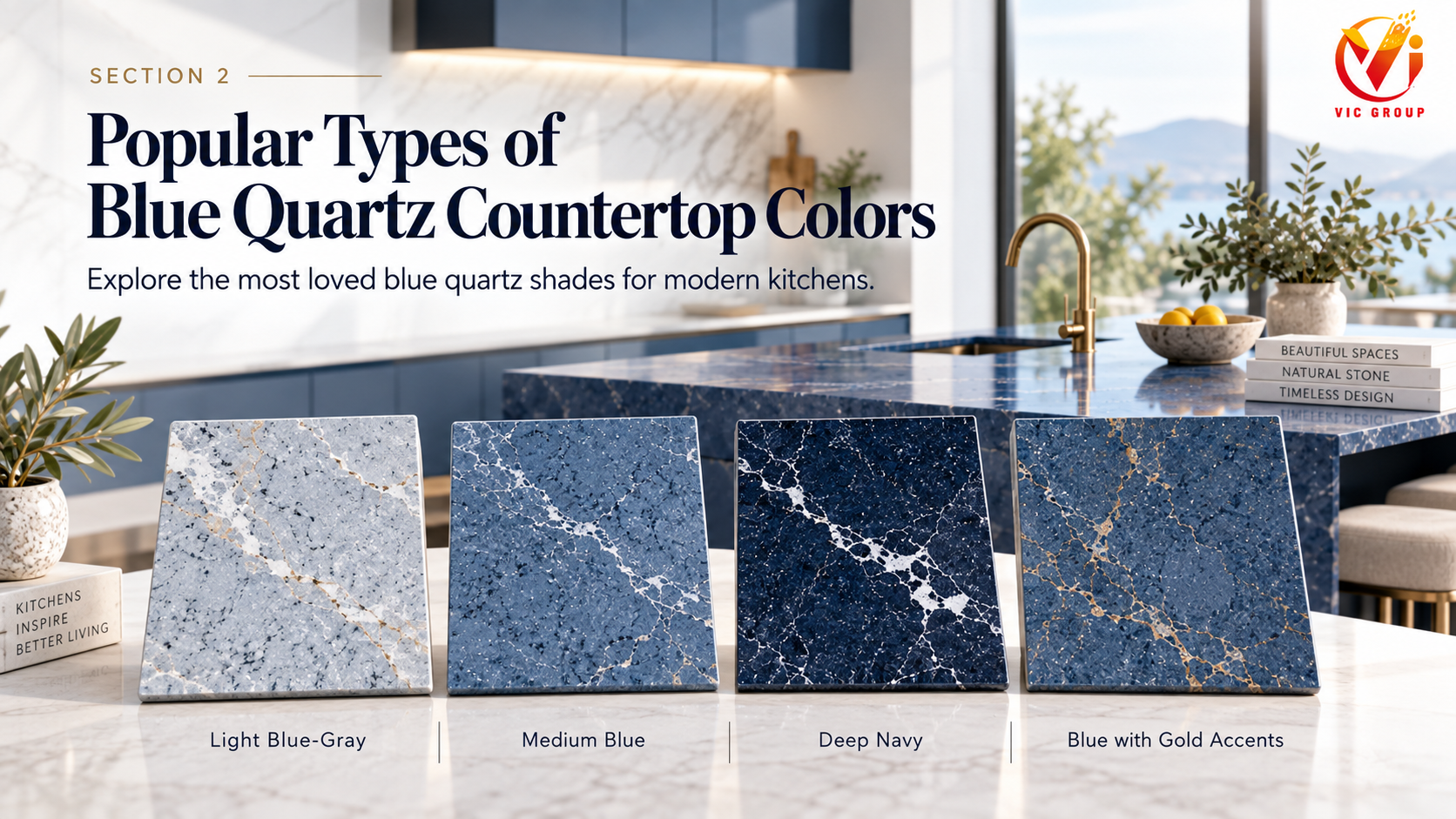
Light blue-gray surfaces are easier to combine with cabinetry because they behave similarly to gray quartz. Darker blue quartz countertop colors create more contrast and usually work best when the surrounding materials are kept relatively simple.
>>> SEE MORE: Kitchen Island Quartz Countertop: The Heart of Your Modern Family Home
3. Light Blue and Blue-Gray Quartz
Light blue color quartz is one of the easiest blue options to use in residential interiors. Instead of appearing strongly blue, these surfaces often combine cool blue undertones with gray, white, or soft veining.
They can work well with white Shaker cabinets, light wood cabinetry, gray cabinets, or brushed-metal hardware. In spaces with natural daylight, blue-gray quartz can appear fresh and clean without dominating the kitchen.
For larger projects, softer blue tones can also be easier to repeat across multiple units because they provide visual interest while remaining relatively neutral.
4. Dark Blue and Navy Quartz Countertops
Dark blue quartz produces a stronger design statement. Navy and deep blue backgrounds can create dramatic contrast against white or light wood cabinetry, while darker cabinets can produce a more monochromatic and sophisticated interior.
Because dark surfaces attract more visual attention, the surrounding design should be carefully balanced. Simple backsplashes, restrained hardware, and lighter walls can prevent the room from feeling overly heavy.
When evaluating dark blue quartz countertop colors, it is also important to review a full slab rather than relying only on a small sample. Large-scale movement and veining can look very different once installed across an island or long countertop run.
>>> SEE MORE:Marble Quartz Countertops: Beautiful Modern Ideas for Your Dream Kitchen
5. Blue Quartz With White or Gold-Style Veins
Many decorative quartz designs combine a light or medium blue background with white, gray, or warm gold-style veins. These patterns can provide the visual movement associated with natural stone while offering greater pattern consistency.
Blue and white combinations tend to feel cooler and cleaner. Blue with warmer veins can coordinate more easily with brass hardware, warm wood cabinetry, or beige flooring.
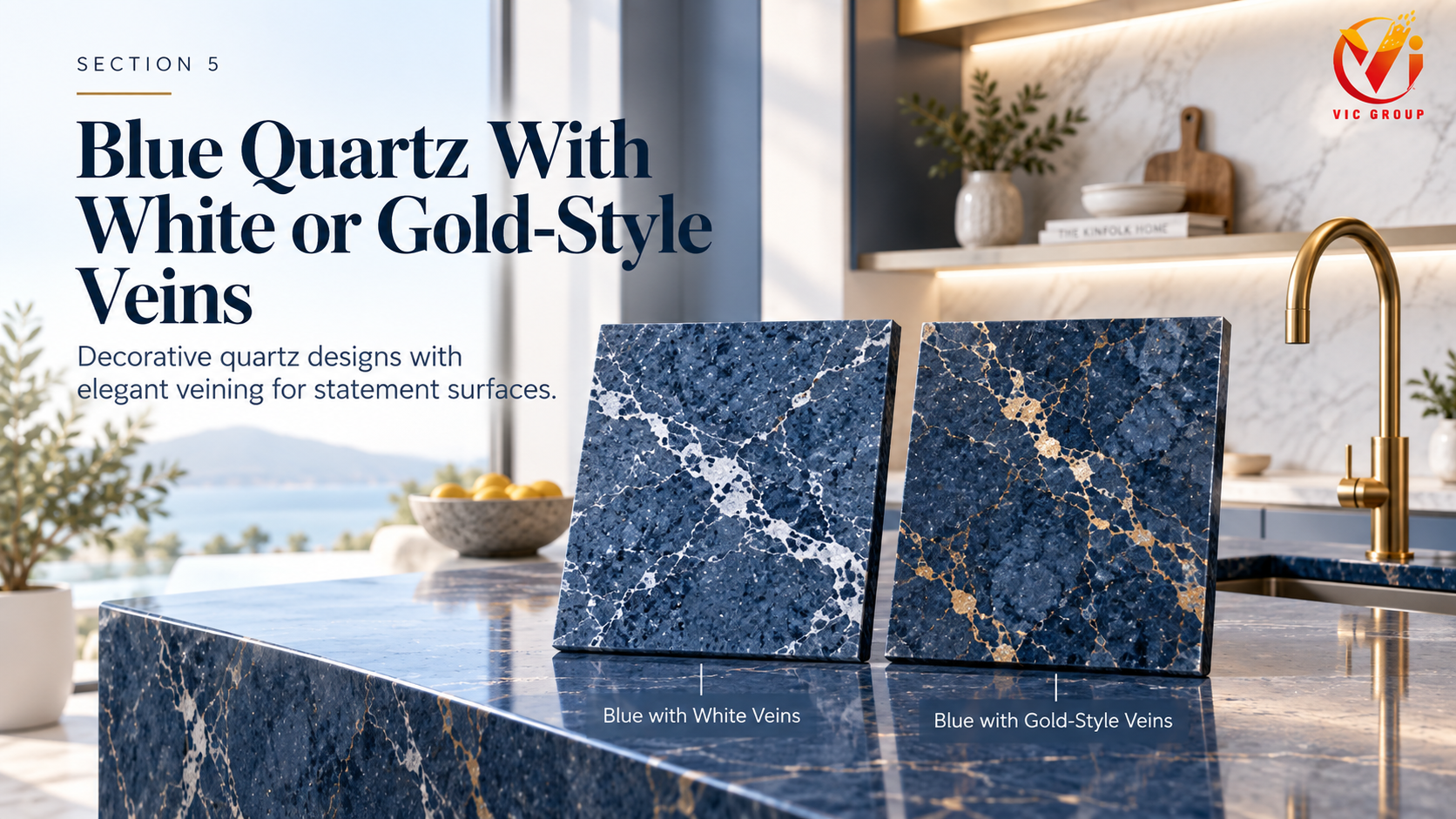
This type of blue color quartz is often selected for kitchen islands because the larger surface area allows the pattern and veining to become a focal point.
6. Blue Quartz vs. Beige Color Quartz
For buyers who prefer a softer and more neutral surface, beige color quartz offers a very different design direction.
Beige color quartz usually creates a warmer and more relaxed appearance. It works especially well with cream cabinets, natural wood tones, warm lighting, and traditional or transitional interiors.
By comparison, blue quartz countertop colors are better suited to projects where the designer wants the countertop to contribute more strongly to the overall color palette.
7. Blue Quartz vs. Brown Quartz Countertop Colors
Brown quartz countertop colors range from light taupe and coffee shades to deeper chocolate-inspired surfaces. They usually create a warmer and more natural look than blue.
Brown works particularly well with wood cabinetry, cream finishes, beige flooring, and traditional interior palettes. Depending on the pattern, brown quartz can resemble earthy natural stone or create a more uniform contemporary surface.
For buyers searching brown quartz countertops colors, the most important decision is usually undertone. Some browns contain gray or taupe undertones, while others lean toward red, gold, or beige.
Choosing the wrong undertone can make cabinetry and flooring appear mismatched even when each material looks attractive separately.
8. How to Choose Between Blue, Beige, and Brown Quartz
The best countertop color should be selected as part of the complete interior rather than as an isolated slab.
8.1. Consider Cabinet Color
White cabinetry offers the widest flexibility. It can work with blue, brown, or beige color quartz.
Natural wood requires more careful coordination. Warm woods usually pair easily with beige and brown quartz countertop colors, while pale oak and cooler wood tones may work particularly well with blue-gray quartz.
8.2. Review Lighting Conditions
Natural and artificial lighting can significantly change how countertop colors appear. A pale blue quartz may look gray in warm interior lighting, while brown quartz can appear deeper or more golden.
Always review samples under the lighting conditions expected in the finished room.
8.3. Consider the Size of the Surface
A strong color becomes more visually dominant as the countertop area increases. A bold navy slab may look attractive as a sample but become much more powerful when used across a large island.
For larger countertop programs, softer blue quartz countertop colors may provide more flexibility.
8.4. Coordinate the Entire Material Palette
Countertops should be compared with cabinet doors, flooring, backsplash materials, wall colors, and hardware.
For example, blue quartz with warm veining can connect cool cabinetry with brass hardware, while beige color quartz can help unify several warm finishes within the same interior.
9. Are Blue Quartz Countertops Suitable for Commercial Projects?
Yes. Blue quartz can be used in hospitality, multifamily amenity areas, reception counters, restaurants, retail interiors, and other commercial applications.
For project buyers, however, color selection is only one part of the decision. Large projects should also consider slab size, batch consistency, fabrication requirements, replacement availability, thickness, and pattern continuity.
Highly decorative blue quartz countertop colors may require more planning for vein matching, while simpler blue-gray designs can be easier to fabricate repeatedly across multiple countertops.
10. What Should Buyers Check Before Choosing a Quartz Color?
Before approving a color for residential or project use, buyers should review:
- Full slab appearance rather than only small samples
- Background color and undertone
- Vein direction and pattern scale
- Cabinet and flooring compatibility
- Lighting conditions
- Batch consistency
- Slab dimensions and thickness
- Fabrication layout
- Availability for future replacement pieces
This is particularly important with blue, brown quartz countertop colors, and other distinctive surfaces because differences in tone can be more noticeable than with basic white quartz.
11. Which Quartz Color Is Right for Your Project?
Choose blue quartz countertop colors when you want a cooler, more distinctive surface that can become part of the design identity. Light blue-gray works well for understated interiors, while deeper blue and decorative veining create stronger focal points.
Choose beige color quartz when warmth, versatility, and easy coordination are the priorities. Beige is especially compatible with cream and wood cabinetry.
Choose brown quartz countertop colors when the project calls for earthy warmth, natural-looking tones, or stronger coordination with wood finishes.
There is no universally best color. The right option depends on the cabinet finish, lighting, surrounding materials, application, and overall design concept.
12. Conclusion
Blue quartz countertop colors provide more design possibilities than simply choosing between light blue and dark blue. Options range from subtle blue-gray surfaces to dramatic navy backgrounds and blue patterns with white or warm veining.
When comparing blue color quartz, beige color quartz, and brown quartz countertop colors, consider the complete material palette rather than the countertop alone. Cabinet color, lighting, flooring, backsplash, slab pattern, and project scale all affect how the final surface will look.
For distributors, fabricators, builders, and project buyers, reviewing full slabs and confirming color consistency before production can also help ensure the selected quartz performs visually across the entire project.